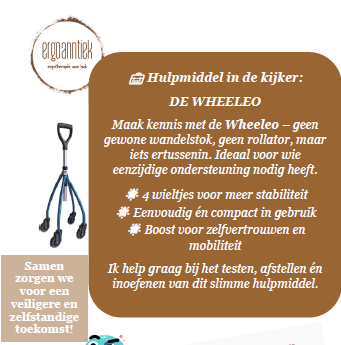
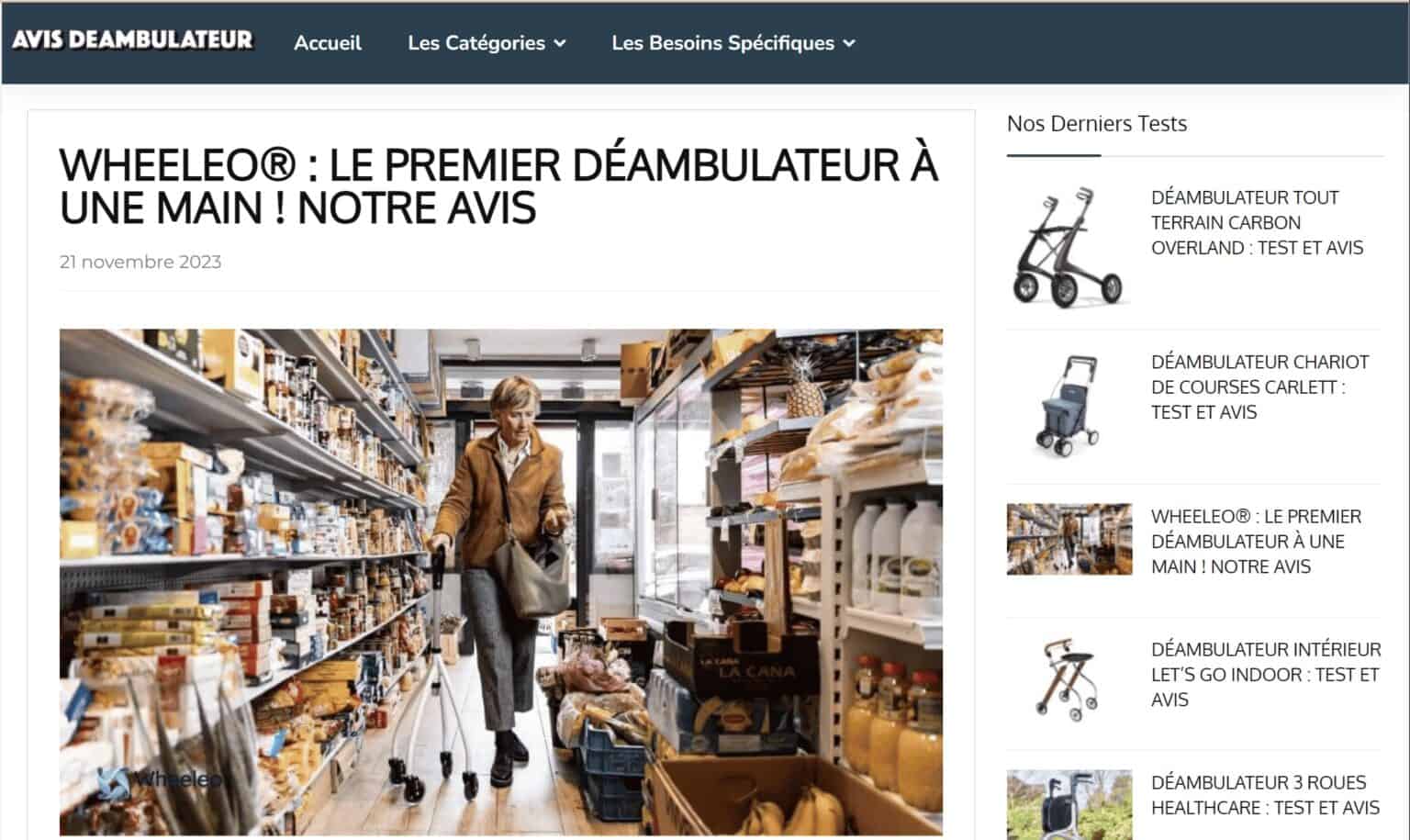
The Wheeleo® in Orthopedics: Continuous Support, before and after Surgery
In orthopedics, pain, reduced weight-bearing, and loss of stability are major impediments to mobility. Whether before an intervention (TKR, THR, etc.) or after it, patients go through phases where their walking becomes hesitant, limited, sometimes impossible without assistance.
The Wheeleo® then provides a simple, intuitive, and immediately effective solution.
Before a total knee replacement (TKR) or hip replacement (THR): relieving pain and enabling mobility despite it
Before surgery, joint pain and stiffness severely limit movement.
Thanks to its constant, light, and fluid support, the Wheeleo®:
- partially relieves painful weight-bearing,
- reduces the tendency to limp,
- facilitates movement during difficult times
- allows the patient to remain mobile while awaiting surgery.
Staying active before surgery improves recovery: the Wheeleo® thus becomes a true tool for maintaining independence.
After TKR or THR: Occasional Support… or Prolonged as Needed
Even if current protocols significantly reduce the long-term use of walking aids after TKR/THR, clinical reality is more nuanced.
Many patients:
- experience residual pain,
- lack stability,
- need support in certain contexts (transfers, stairs, standing up, fatigue),
- exhibit slower motor learning.
The Wheeleo® can be used:
- very occasionally: when transitioning from crutches to walking without assistance;
- or for a longer period: when stability is compromised or pain persists.
Its fluidity allows the patient to walk more naturally, without the constraints of rigid or asymmetrical support.
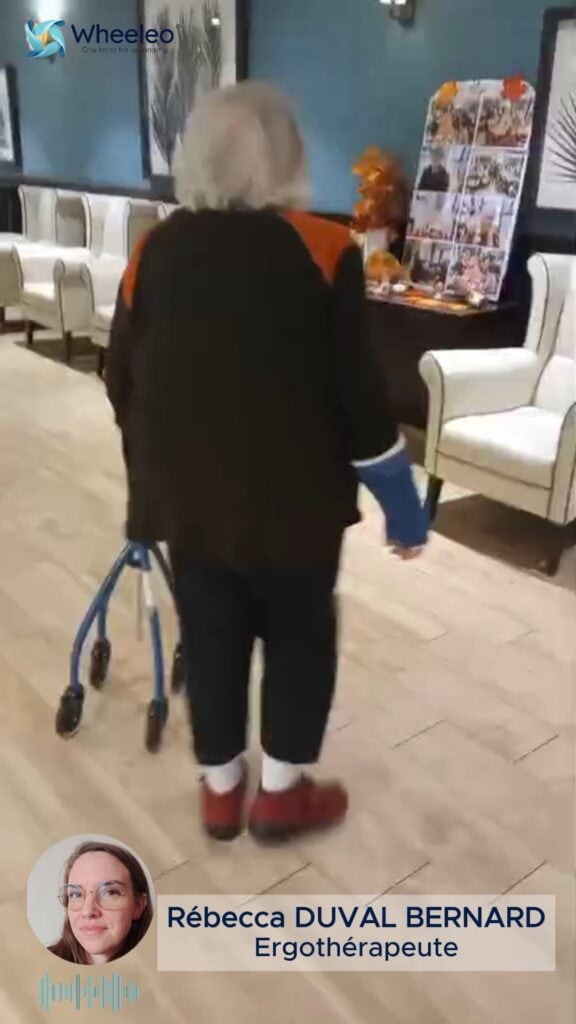
Special Case: when a Walker User Has an Immobilized Arm
This is a common situation in orthopedics:
- wrist fracture,
- shoulder dislocation,
- rotator cuff tear,
- immobilizing surgery…
For people who usually use a traditional walker, this arm immobilization becomes a real handicap. They can no longer safely maneuver their walker… and sometimes find themselves unable to walk for several weeks, with a major risk of losing independence.
The Wheeleo® then offers a safe replacement solution:
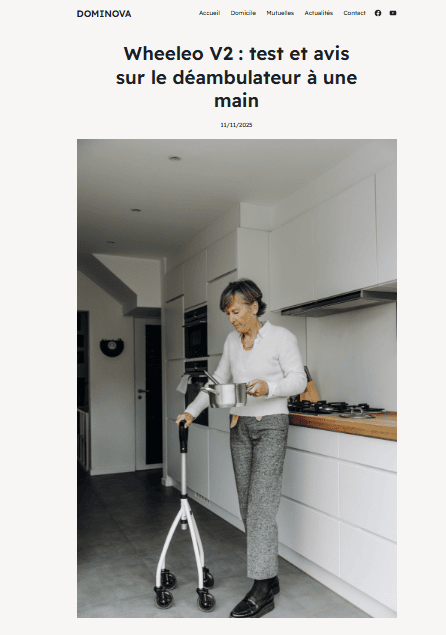
- it provides stable and continuous support with just one hand,
- it generates sensations closer to a traditional walker than a simple cane,
- it limits lateral imbalance,
- it maintains walking throughout the immobilization period.
It’s a simple way to avoid the spiral: immobilization → loss of mobility → deconditioning → functional regression.
Conclusion
In orthopedics, the Wheeleo® is not just a technical aid:
it is a true mobility facilitator, capable of supporting patients before, during, and after difficult phases.
It provides safety, relief, stability, and above all… it maintains walking, which remains the major challenge in all locomotor pathologies.